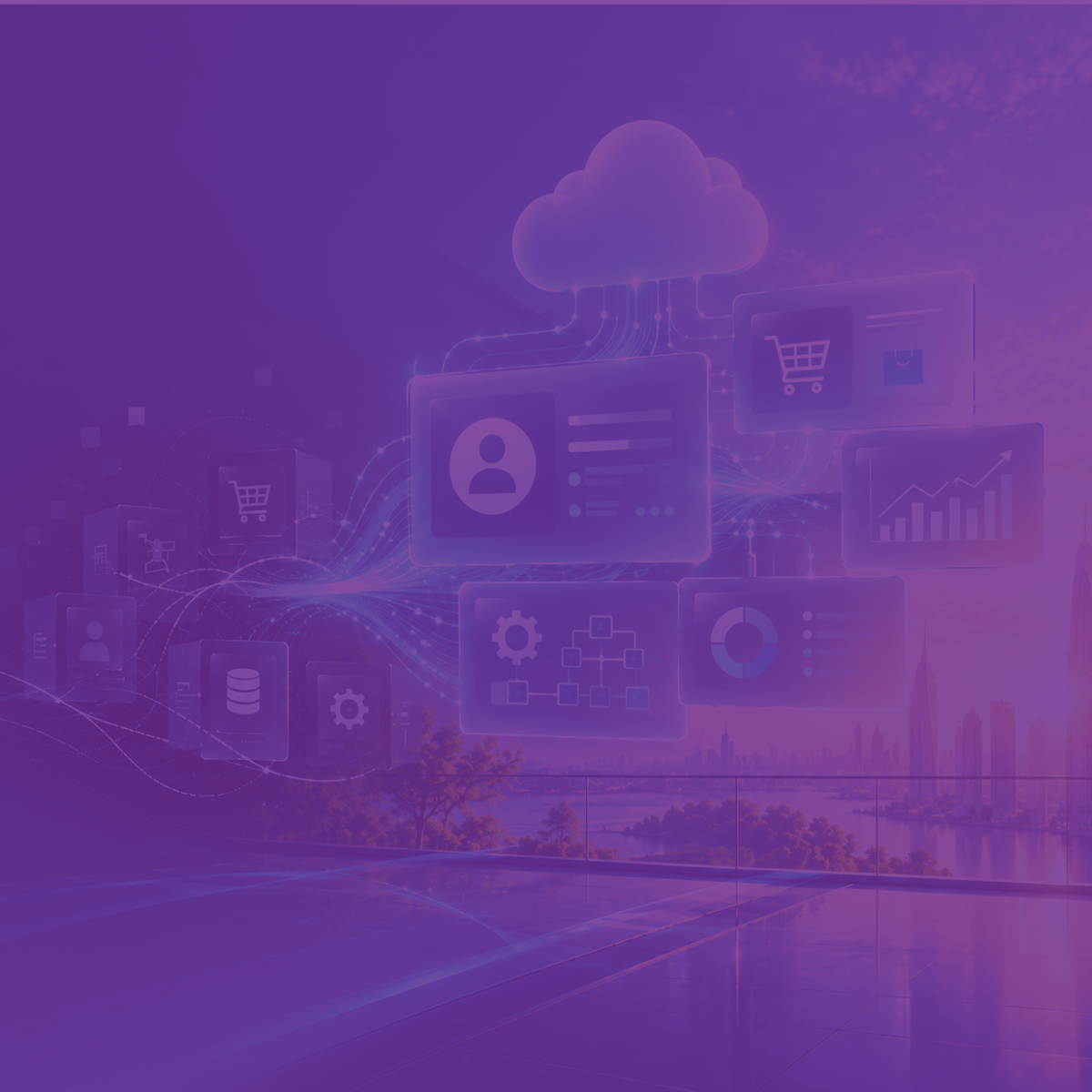
The clock is ticking for many SAP customers. With mainstream support for SAP NetWeaver ending in 2027 organisations must act now to ensure a seamless transition to SAP Cloud applications. At Birchman, we take a holistic approach to these migrations, recognising that it’s not just about ECC, there are also BW, APO, BPC, Solution Manager and PI/PO to consider. Our road mapping services help customers develop comprehensive strategies for SAP and non-SAP applications alike.
Maximising the potential of SAP Cloud Applications
Migrating to SAP’s Business Technology Platform (BTP) brings many advantages. With out-of-the-box compatibility, SAP Analytics Cloud, Integration Suite, Datasphere, Application Development and embedded AI functions work seamlessly with Cloud ERP (S/4HANA) and other SAP Cloud applications. This migration is also an opportunity for organisations to rationalise their landscapes, particularly in integration.
Why migration to Integration Suite matters
For customers who are utilising PI/PO and moving from ECC to Cloud ERP (S/4HANA), transitioning to Integration Suite modernises integration landscapes while leveraging SAP’s cloud native capabilities. Traditionally, migrating interfaces has been complex and time consuming but SAP’s tools significantly simplify the move from PI/PO to BTP Integration Suite. To further enhance business integration and efficiency, explore how SAP Cloud ERP supports your digital transformation journey.
- Migration assessment – Identifying interfaces that can migrate as is versus those requiring changes.
- Migration tooling – Automating the migration of PI/PO objects to Integration Suite.
Birchman also offers services for migrating from other integration platforms to Integration Suite, this has limited support from standard SAP offered tools, of course.
Why you should start planning now
Thinking you have two years before this becomes a priority? The reality is, planning early reduces risk and cost. Our assessment package evaluates up to 100 integrations in just three weeks – without impacting your business all for just £8k.
Our agile migration approach
This blog outlines our approach to the PI/PO migration to Integration Suite.
A big bang migration, where all NetWeaver applications are moved at once, can lead to substantial disruption and higher costs. At Birchman, we take an agile approach to migration, focusing on seamless transitions and minimising risks. This method has shaped our migration offerings to ensure your organisation moves forward smoothly.
- ECC to Cloud ERP (S/4HANA) conversion assessment & pre-migration planning
- Identifying the right deployment and hosting strategy
- Archiving and data optimisation
- Business Partner and Credit Management conversion
- Cloud ERP (S/4HANA) migration projects
- PI/PO migration (focus of this blog)
- Fast assessment to generate a budgetary proposal and to understand the workload
- Flexible migration pathways:
- Prior to Cloud ERP (S/4HANA) conversion
- Simultaneous with Cloud ERP (S/4HANA) conversion
- Subsequent to Cloud ERP (S/4HANA) conversion (with consideration for rework requirements)
- Data strategy & AI integration
- Developing a customer centric roadmap to the right data platform
- Leveraging AI for enhanced insights and automation
- Integrated Business Planning (IBP)
- Pre-packaged IBP to S/4 interfaces for seamless integration
- AI use-case development
- Defining business needs and selecting the right AI tools
At Birchman, we build on standard SAP tools while continuously enhancing and expanding their capabilities. Our projects follow the SAP Activate methodology, ensuring a structured, efficient and future-proof migration journey.
PI/PO fast assessment
- Standard package – 10 day assessment for landscapes with up to 100 integrations
- Utilising SAP delivered tools to ensure a structured and efficient evaluation
- Integration Suite service plan) and requires the PI/PO system to be on the correct SP level (see requirements below*)**
- Categorises all interface scenarios as:
- Ready to migrate
- Adjustment required
- Evaluation required
- Includes T-shirt sizing to assess effort across interfaces
- Assessing the results
- Categorises all Evaluation Required and Adjustment Required interfaces to determine the nature and scope of required changes
- Generating a budgetary proposal and high level migration plan
- Highlighting rework considerations
- If PI/PO migration occurs before ECC to S/4 conversion, potential rework at the S/4 migration stage must be factored in
- *System requirements
- PI/PO must be at least on the following Support Package (SP) levels:
- SP28 for version 7.31
- SP23 for version 7.40
- SP06 for version 7.50
- PI/PO must be at least on the following Support Package (SP) levels:
Subsequent PI/PO migration project (post assessment)
- Full migration delivered as a structured project, ensuring a comprehensive transition approach
- Customer owned initiative, with Birchman providing expert guidance and execution support
- Leverage standard SAP tools to automate migration wherever feasible, reducing manual effort and risk
- Develop required modifications and new interface functionality, utilising pre-packaged SAP content wherever possible to streamline integration
- Deliver SAP’s activate methodology, ensuring a structured, agile and best practice driven implementation
- Business Change as a critical success factor, ensuring alignment between technology transformation and organisational readiness
Why choose Integration Suite as your integration platform?
As a Platinum SAP Partner, Birchman stays at the forefront of SAP innovations and emerging toolsets. Our approach goes beyond technical implementation, we focus on the holistic total cost of ownership (TCO) and the long term strategy for building a future ready, digitally transformed enterprise.
Here’s our assessment of SAP Integration Suite as an integration platform:
SAP BTP Integration Suite capabilities
SAP BTP provides the SAP Integration Suite as a modern alternative to SAP PI/PO. Key components of the suite include:
- Cloud integration (CI): For process orchestration and message based integrations.
- API management: To expose and manage APIs securely.
- Event mesh: For event driven architecture.
- Open connectors: To integrate with non-SAP applications.
- B2B integration: For handling EDI and B2B scenarios.
Standard interface migration projects where legacy platform is not SAP PI/PO. Perform a detailed assessment of your current system, including:
- Number and types of interfaces
- Adapter usage (e.g., SOAP, REST, JDBC, IDOC)
- Custom mappings and transformations
- Legacy systems and dependencies
- Performance requirements and SLAs
Plan migration strategy
a. Rebuild vs. Migrate:
- Rebuild: For legacy interfaces or when modernisation is needed
- Migrate: For newer or critical interfaces
b. Prioritise interfaces:
- Start with ‘ready to migrate’ interfaces
- Start with less critical or simpler interfaces for proof of concept
- Gradually move to high priority, complex integrations.
- Meanwhile evaluate those interfaces with category ‘evaluation required’ and ‘adjustment required’ on the migration assessment
- Identify adjustments and classify degree of adjustment
- Prioritise and plan
c. Identify skill gaps:
- Train your team on SAP Integration Suite and cloud technologies
Set up SAP Integration Suite
- Provision the Integration Suite in your BTP subaccount
- Configure essential components such as connectivity (Cloud Connector, Destination Service), security settings and monitoring
Rebuild or migrate interfaces
a. Recreate PI/PO scenarios:
- Use cloud integration for message based integrations
- Replace PI/PO adapters with equivalent Integration Suite adapters (e.g., IDOC, SFTP, OData)
b. Migrate mappings:
- Rebuild message mappings using Groovy scripts, XSLT or Integration Flow tooling
- For graphical mappings, recreate logic in Cloud Integration
c. Leverage APIs and events:
- Use API management to expose services
- Shift to event driven architecture where applicable
Test and Validate
- Conduct unit tests for individual interfaces
- Perform integration tests to validate end-to-end scenarios
- Compare results with the PI/PO system to ensure parity
Monitor and optimise
- Use the SAP Integration Suite monitoring tools for:
- Message tracking
- Error handling
- Performance analysis
- Regularly optimise interfaces and ensure compliance with SLAs
Decommission SAP PI/PO
Once all interfaces are migrated and validated:
- Inform stakeholders about the transition
- Safeguard historical data (if necessary)
- Retire the PI/PO system to reduce costs
Tools and resources
- Migration assessment tool: Available in SAP PI/PO to analyse integration scenarios
- SAP help portal: Documentation for the SAP Integration Suite
- Learning Hub & SAP courses: Focused training on SAP BTP and the Integration Suite
Start your migration assessment today
With SAP NetWeaver support ending in 2027, now is the time to assess your PI/PO to Integration Suite migration strategy. Our fast, no commitment and low cost assessment package provides a comprehensive analysis in just 1-2 weeks, evaluating up to 100 integrations with minimal business impact and delivering a clear scope assessment of the migration effort to enable accurate planning.
By acting early, you can reduce risk, control costs and ensure a seamless transition to SAP’s cloud native integration platform.
Find out more about Cloud ERP (S/4HANA) Public
Find out more about Cloud ERP (S/4HANA) Private
FAQs
Question #1: What is the difference between SAP PI/PO and SAP Integration Suite on SAP Business Technology Platform (BTP)?
Ans: PI/PO is the older on-premises integration platform built on SAP NetWeaver. Integration Suite is a cloud native integration service on BTP offering modern capabilities such as API management, event mesh and open connectors
Question #2: Why should businesses plan this migration now?
Ans: SAP PI/PO is gradually being phased out so moving to BTP Integration Suite helps you stay current, reduce maintenance costs and adopt modern integration practices.
Question #3: How do you plan a migration from PI/PO to Integration Suite?
Ans: Assessment of existing interfaces (which are “ready to migrate”, “adjustment required”, “evaluation required”).
- Decide whether to migrate or rebuild certain interfaces.
- Re-create/adapt interfaces, mappings and adopt APIs/events.
- Testing, validation, monitoring & optimisation.
- Decommission PI/PO once migration is complete.
Question #4: What are the cost and risk benefits of starting migration early?
Ans: Early planning reduces risk and cost by avoiding last minute scramble before support deadlines. A fast assessment package (10-day) is offered to evaluate up to 100 integrations with minimal business disruption.
Question #5: How can Birchman support this migration?
Ans: Birchman helps assess your existing setup, plan the migration strategy and ensure a smooth transition to the SAP BTP Integration Suite with minimal disruption.